Inside Software 03.29.26: The Agentic Reset for Product + Engineering

Every other week we’ll provide updates on the latest value levers and trends operators are asking us about in Technology and Software. If there are things you want to hear more about - shoot us a note.
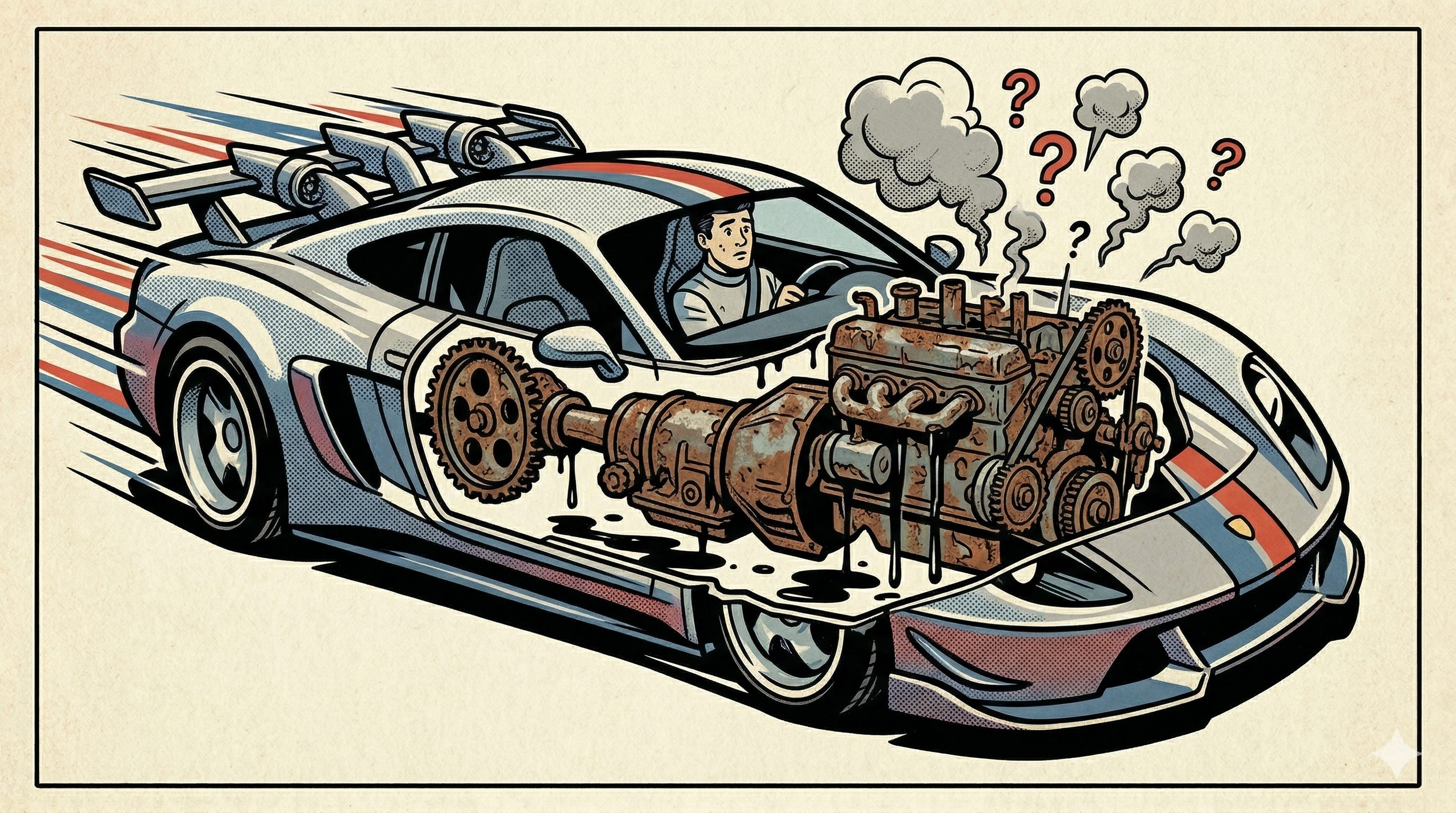
What is the future going to look like? Here’s our bet: using AI to accelerate your product roadmap is an absolute imperative. The tools are moving insanely fast, and despite the hype, most teams are still struggling to turn that speed into real throughput. In our client work, it feels like ~95% are stuck somewhere between “we rolled something out” and “we changed the system.”
Before we go further, quick definitions (because this gets muddled): PDLC is the Product Development Lifecycle - how you go from customer signal → intent → prioritization → “what should we build and why.” SDLC is the Software Development Lifecycle - how you go from intent → code → test → release → learn. The AI shift touches both and the biggest gains come when you redesign them together, end-to-end.
Why so many teams stall (the archetypes we keep seeing)
Most companies start by optimizing one activity (code-gen, test creation, PRD drafting). That feels great locally, and then the bottleneck simply moves. A few recurring “stuck points” show up across clients:
“We have complex / legacy code, AI can’t handle that.” It can contribute meaningfully, but only if you build context and scaffolding so agents can navigate safely (otherwise you get fragile changes, broken builds, and endless back-and-forth).
“We rolled out copilots extensively.” Rollout ≠ utilization ≠ impact. Without new workflows, measurement, and guardrails, adoption plateaus and value stays anecdotal.
“We use [insert tool] and it’s awesome for completion.” Code completion is useful, but it’s not the endgame. The unlock is a hybrid model: IDE assistance for tight loops, plus agent mode for multi-step work (research → plan → implement → test → iterate).
“My team doesn’t want to do it.” This isn’t a fad skill. It’s the skillset of the future. Teams need enablement, exemplars, and psychological safety to learn a new way of working.
“We can’t track or prove value.” If you can’t see it, you can’t scale it. You need a measurement spine that ties AI changes to delivery outcomes.
“We can’t keep up with the pace of change.” Tools, patterns, and best practices will keep shifting. Winning requires a dynamic capability, not a one-time rollout.
The emerging blueprint (principles that actually compound)
While tooling changes weekly, a few principles are proving durable:
1) Context is king.
The winner won’t be the best coding assistant, it will be the platform (and company) that can reliably provide end-to-end lifecycle context: product intent, architecture, codebase conventions, telemetry, security posture, risk policies, customer signals. Without that, agents are task accelerators, not orchestrators.
2) Shift left (hard).
As engineering execution compresses, the constraint moves upstream. Better inputs matter more than ever: clearer intent, sharper acceptance criteria, machine-readable “stories,” and workflows like Research → Plan → Implement (or spec-driven approaches) that create leverage. Yes, testing and release matter, but it’s still garbage in/garbage out.
3) Close the loop.
SDLC is a unique AI modality because it’s inherently multi-step across teams. The real gains come from transferring context between stages and feeding runtime truth back into planning. This is also where AI exposes product-engineering dysfunction: misalignment, fuzzy priorities, and brittle handoffs.
4) Treat risk as a first-class design constraint (not an afterthought).
Giving agents leverage over your product means you need a risk envelope: permissioning, policy-as-code guardrails, auditability, evaluation harnesses, secure handling of secrets/IP, and clear “human checkpoints” for high-risk changes. This is how you go fast without getting yourself into trouble.
5) Be intentional on Buy vs Build.
We see teams default to “build everything.” That slows you down and usually gets you a worse long-term outcome. Buy commoditized tooling/orchestration where it accelerates learning. Build the parts that are truly differentiating: your context layer, your domain ontology, your guardrails/evals, and the workflows that reflect how you ship software.
What has to change (end-to-end)
If you want real throughput, you’re not “adding AI.” You’re rewriting the system.
Artifacts change: from PRDs and Jira tickets as human prose → to structured intent artifacts agents can act on.
Cadence changes: from time-boxed sprints → to tighter, more continuous delivery loops.
Team anatomy changes: from large pods doing manual execution → to smaller groups of senior orchestrators overseeing agent workflows.
Governance changes: from informal review norms → to explicit evaluation, policy, and risk management.
How we help clients (and why our approach is different)
This is where we’re spending time with clients right now: technology + process redesign + massive behavior change. The tech is often the easiest part. The hard part is making it repeatable at enterprise scale.
Our approach is deliberately end-to-end and pragmatic:
Pick one “workflow that matters” (idea → shipped value → learned signal; or issue → fix → regression protection → release).
Instrument the baseline so value is measurable, not vibes.
Redesign PDLC + SDLC together so you don’t create new bottlenecks as engineering speeds up.
Build lightweight scaffolding that turns agentic work from demos into repeatable performance. Teasers of what that looks like:
Agents.MD / repo playbooks: concise “how this codebase works” guides (build/run/test, conventions, gotchas, security rules).
Guardrails + hooks: deterministic gates (linting, test execution, sensitive-file restrictions, policy checks).
Evaluation harnesses: golden tests, conformance checks, and safety constraints that scale quality.
Run structured pilots across multiple teams with rapid learning loops, then codify what works into playbooks and rollout waves.
And importantly: we help clients build a capability to keep up with constant change, DevEx ownership, references and snippets, wikis, Slack/Teams channels, office hours, internal demos, and a continuous improvement loop that updates both process and scaffolding.
One meta-point: Inside Software isn’t meant to be commercial. We share these patterns not to nudge you into calling Bain, but to show how teams are actually driving change, so you can use the moves and apply them in your own environment. (And, look…if you do want a thought partner as you make the leap, give us a ring. We’re pretty good at this stuff 😉)
The action moment
We’ve said this multiple times in Inside Software: this is a rare once-in-a-15-year cycle where we’ve hit the steepest part of the innovation curve. Right now, product speed and innovation matter more than GTM polish or free cash flow war chests.
So don’t wait.
If you know where you want to go: pick one end-to-end workflow and start redesigning it now.
If you don’t know where to start: ask. Run a structured pilot. Measure outcomes. Iterate weekly.
Because the market won’t give you three years to figure this out.
Note: The opinions expressed in this article are my own and do not represent the views or specific recruiting practices of Bain & Company. The information provided is believed to be from reliable sources but no liability is accepted for any inaccuracies.